
Why Does My Skin Crease So Easily Now?
Collaborative Post
If your skin seems to crease more easily than it used to, thinning skin may be part of the reason. As collagen, elastin, hydration, and skin density gradually decline with age, the skin becomes less resilient and less able to bounce back after facial expressions or everyday movement. As a result, fine lines and temporary creases can become more noticeable and may linger longer than they once did.
Although dehydration can make these creases appear more pronounced, repeated skin folding is often linked to deeper structural changes beneath the surface rather than a lack of moisture alone. Understanding these changes can help you choose skincare that supports skin quality as well as hydration. For this reason, some people incorporate repair-focused, clinic-grade skin care products such as CALECIM® Professional into their routine to help support healthier-looking, more resilient skin.
Skin creases more easily as collagen, elastin, and skin density decline
Skin creases more easily when its supportive structure weakens. Over time, natural aging reduces collagen and elastin, while the skin also loses moisture and density, making it less resilient when folded.
Collagen acts as the skin’s structural scaffold, while elastin allows it to stretch and return to its original shape. As both decline, skin becomes thinner and less resistant to everyday mechanical stress.
This process is especially noticeable during and after menopause. The American Academy of Dermatology states that women lose approximately 30% of their skin’s collagen during the first five years after menopause, followed by about 2% each year for the next 20 years. Lower estrogen levels also contribute to thinner, drier, and less elastic skin.
Similarly, MDPI Cosmetics reports that type I collagen is a major structural component of the skin, and age-related collagen decline contributes to dermal thinning, reduced elasticity, wrinkles, and sagging.
Skin creasing often happens when your skin stops bouncing back as quickly as it used to
Creases become more noticeable when the skin cannot recover quickly after being compressed. This slower recovery reflects changes in collagen, elastin, and hydration rather than aging on the surface alone.
Why collagen loss makes skin less cushioned
Collagen forms much of the skin’s supportive framework. As collagen production slows with age, the skin becomes thinner and less able to resist repeated folding.
Instead of immediately smoothing out after smiling or sleeping, the skin may temporarily hold those folds, allowing fine lines to become more noticeable over time.
Why loss of elasticity makes creases linger
Elasticity determines how well skin returns to its original position after stretching or compression.
Scientific Reports notes that the organization and quality of elastin fibers play an important role in skin firmness and elasticity, influencing how well skin returns to its original shape after being stretched or folded.
When elastin fibers become less organized with age, skin takes longer to recover from repeated movement, making expression lines and sleep creases last longer than they once did.
Why dehydration makes fine lines look sharper
Hydration affects how smooth the skin surface appears. When the outer layer of the skin lacks water, fine lines often look deeper even if the underlying skin structure has not changed dramatically.
Hydration can also improve skin texture. According to Dermatology and Therapy, participants using a topical hyaluronic acid serum experienced a 134% immediate increase in skin hydration, with a 31% improvement in the appearance of fine lines after six weeks. These findings suggest that hydration can soften superficial lines, although it does not replace lost collagen or elastin.
Thinning skin, dry skin, and fine lines can look similar but need different support
Although these concerns often appear together, they do not have the same underlying cause.
| Concern | Primary Cause | What May Help |
| Dry skin | Reduced moisture in the outer skin layer | Moisturizers and hydration-focused skincare |
| Fine lines | Surface dehydration and early collagen decline | Hydration plus active anti-aging ingredients |
| Thinning skin | Reduced collagen, elastin, and skin density | Long-term skin repair and collagen-supporting skincare |
Moisturizer can soften creasing, but it may not be enough if skin density is changing
Moisturizers are essential for healthy skin, but they primarily improve hydration. They cannot fully replace collagen, elastin, or the structural proteins that naturally decline with age.
This is why some people notice that their skin still creases easily even after applying rich creams. Hydration improves the surface, while deeper structural changes require ingredients that support ongoing skin renewal.
For concerns such as visible thinning skin, loss of elasticity, and persistent fine lines, many dermatologists recommend combining hydration with evidence-based active ingredients.
The best skincare approach supports hydration, repair, collagen, elastin, and skin resilience
The most effective routine for skin that creases easily addresses more than dryness alone. It should support hydration at the surface while also encouraging healthier skin structure over time.
A balanced routine may include:
- A gentle cleanser that protects the skin barrier
- A hydrating moisturizer with ingredients such as hyaluronic acid
- Daily broad-spectrum sunscreen to reduce further collagen breakdown from UV exposure
- Evidence-based active ingredients
- Repair-focused skincare that supports overall skin quality
CALECIM® Professional skincare is most suitable when creasing is linked to thinning skin, loss of elasticity, and visible fine lines
When skin creases more easily because of declining skin quality rather than dehydration alone, products designed to support repair and skin resilience may complement a daily skincare routine.
CALECIM® Professional’s proprietary ingredient PTT-6® contains growth factors, cytokines, and exosomes that aid in skin repair and improve the appearance of aging skin.
Laboratory testing of PTT-6® demonstrated:
- 56% increase in elastin expression
- 83% increase in hyaluronic acid expression
- 42% more skin cell growth after seven days
- 600% average improvement in skin density
Professional Serum for repair-focused support
CALECIM® Professional Serum contains the highest concentration of PTT-6® in the product line. It is designed to support skin repair while improving the appearance of fine lines, wrinkles, and uneven skin tone.
It may be most suitable for:
- Mature skin
- Skin showing visible thinning
- Post-procedure recovery
- Individuals looking for a clinic-grade serum as part of an anti-aging routine
Multi-Action Cream for firmness, lifting, and visible aging concerns
The Multi-Action Cream is intended for people experiencing more advanced signs of aging, including reduced firmness, skin laxity, deeper wrinkles, and loss of skin density.
It can be appropriate for those whose skin not only creases easily but also feels thinner and less resilient throughout the day.
Restorative Hydration Cream for dehydration and plumping
If dehydration is the primary concern, the Restorative Hydration Cream focuses on replenishing moisture while calming the skin.
According to CALECIM® Professional, it contains hyaluronic acid and sodium hyaluronate to deeply hydrate the skin and create a smoother, more plumped appearance. It can also be layered over the Multi-Action Cream for additional hydration.
Skin that suddenly creases, bruises, tears, or changes rapidly may need professional evaluation
Gradual skin creasing is a common part of aging, but sudden changes deserve medical attention.
As reported by Mayo Clinic thin skin becomes more common with aging and may result from sun exposure, genetics, and long-term corticosteroid use. If your skin tears easily, becomes unusually fragile, or changes rapidly without an obvious explanation, it is worth discussing with a healthcare professional.
Frequently Asked Questions
Why does my skin suddenly crease more easily?
Skin often creases more easily because collagen, elastin, hydration, and skin density gradually decline with age. These changes reduce the skin’s ability to bounce back after folding.
Is creasing a sign of thinning skin?
It can be. Skin that repeatedly holds expression lines or sleep creases may be showing early signs of thinning skin, particularly when accompanied by reduced firmness or elasticity.
Are fine lines caused by dryness or collagen loss?
Both can contribute. Dryness often makes surface lines appear more noticeable, while collagen loss contributes to longer-term structural changes that can deepen fine lines over time.
Can loss of elasticity improve with skincare?
Some skincare ingredients may improve the appearance of skin firmness and elasticity over time. Results vary depending on the product, skin condition, and consistency of use.
What ingredients help thinning skin look stronger?
Hydrating ingredients such as hyaluronic acid improve moisture, while evidence-based ingredients like retinoids support collagen production. Repair-focused technologies, including PTT-6® in CALECIM® Professional products, are designed to support skin repair and resilience.
How long does it take to see improvement in fine lines?
Hydration-related improvements may appear within days, while improvements in fine lines often take several weeks. The participants using a topical hyaluronic acid serum showed improvements after six weeks.
Can I use serum and cream together for skin that creases easily?
Yes. Many routines combine a treatment serum with a moisturizer. CALECIM® Professional Serum can be layered under the Multi-Action Cream or Restorative Hydration Cream depending on your skin’s needs.
Conclusion
If your skin creases more easily than it used to, the cause is often more than simple dryness. Thinning skin, collagen decline, reduced elasticity, and lower skin density all affect how well your skin resists everyday folding and how quickly it recovers afterward.
Supporting healthy skin means looking beyond hydration alone. A consistent routine that protects the skin barrier, maintains hydration, and supports long-term skin repair can help improve the appearance of fine lines and skin quality over time. For individuals with visible thinning skin or loss of elasticity, clinic-grade products such as the CALECIM® Professional range may provide an additional repair-focused option when used as part of a comprehensive skincare routine.
This article is for information only. If you have any concerns about your health, please consult your expert medical practitioner.
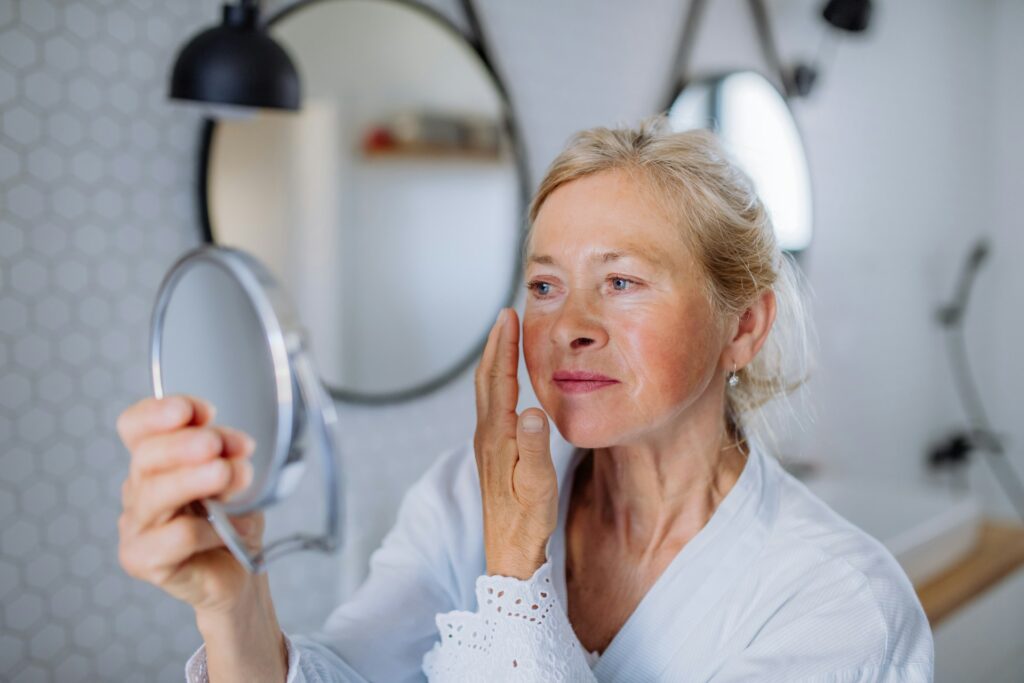
Image credit Getty Images on Unsplash