
A complete guide to dry eye disease and how to treat it
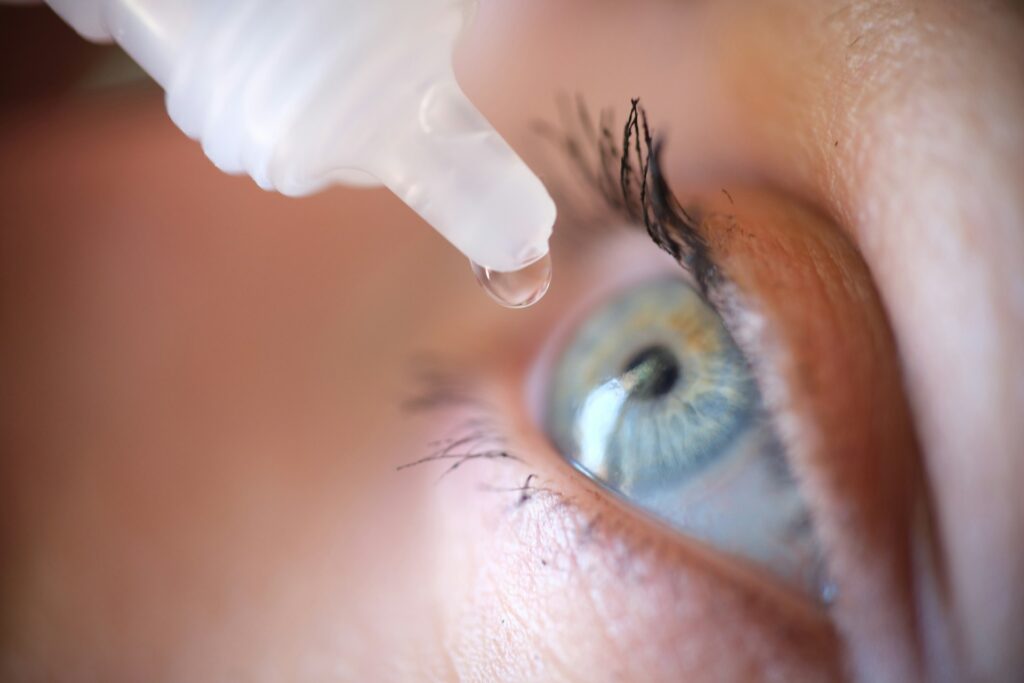
Dry eye disease, where tears are not doing their job in lubricating and protecting the eye, is one of the most common conditions seen in eye clinics, yet it’s also one of the most misunderstood. Optometrist Dina Sonpal of Midland Eye explains what it is and the available treatments.
What is dry eye disease?
A stable tear film is essential for both comfort and clear vision, as it provides a smooth optical surface and protects the eye. But tears evaporate. To limit the evaporation, tears contain lipids which work to create a film over the eye.
With dry eye disease, the glands in your eyes either don’t produce enough tears (aqueous deficient dry eye) or produce tears that don’t contain enough lipids and which evaporate too quickly to keep the surface of your eye properly lubricated (evaporative dry eye).
In both cases, the eye quickly becomes dry and cannot keep up with the lubrication requirements, leading to dry, sore eyes.
Symptoms
Some symptoms of dry eye disease are obvious, such as a gritty or sandy sensation, redness, irritation. These symptoms are, however, common for a lot of eye issues and often mistaken for allergies or conjunctivitis.
Dry eye disease can also exhibit symptoms you may not expect. Watery eyes are perhaps the most counterintuitive. The lack of moisture triggers the release of more tears.
Fluctuating or blurred vision is another symptom that can be ambiguous. People will usually assume they need new glasses, but sometimes blurred vision can be a problem with tear film quality.
Likewise, light sensitivity can be a result of the tear film. An irregular film surface over the eye ends up scattering incoming light, causing glare.
Why does dry eye develop?
The most common causes of dry eye disease are ageing and prolonged screen use. But there are several causes that patients frequently haven’t considered. Some medications, such as antidepressants, antihistamines, blood pressure medications and some contraceptives can reduce tear production as a side effect.
Environmental factors, such as air conditioning, central heating, wind and smoke, can also cause eyes to dry out and negatively impact tear film quality and production. Contact lenses are another common cause.
One of the most significant and most overlooked drivers of dry eye is Meibomian Gland Dysfunction, or MGD. The Meibomian glands, located in the eyelids, produce the oily layer of the tear film that prevents evaporation. When these glands become blocked or inflamed, they’re unable to produce the right mix of oil for the tear film. As a result, the film breaks down, and tears evaporate too quickly.
Hormonal changes – particularly around menopause – have been found to play a far more significant role than was previously recognised. Research suggests that between 50 and 70 per cent of post-menopausal women experience dry eye symptoms. It’s thought that declining hormone levels can lead to reduced Meibomian gland activity and, as a result, evaporative dry eye disease.
It’s also worth knowing that dry eye can occasionally be an early sign of an underlying systemic condition. Autoimmune conditions such as Sjögren’s syndrome, rheumatoid arthritis, and lupus can all present with dry eye symptoms, as can thyroid disease. This is one of the reasons it’s so important to get an informed professional assessment as soon as possible.
Getting a proper diagnosis
A professional dry eye assessment is more involved and in-depth than most patients expect. It begins with a detailed history and symptom review, followed by an external examination of the eye and eyelids using a slit lamp.
Professional clinicians will then assess the Meibomian glands and evaluate the tear film using ocular surface staining – a technique that reveals areas of damage or instability on the eye’s surface.
Advanced clinics can take testing even further. Meibography, for instance, uses imaging to assess the structure of the Meibomian glands directly, while tear osmolarity testing and inflammatory marker analysis provide additional layers of diagnostic precision.
At Midland Eye, this process is supported by the Topcon TERA – a computer-assisted multi-test dry eye imaging system that helps assess and grade each component to reliably inform a personalised treatment plan.
Treatment options for dry eye disease
The good news is that there are now far more treatment options and they’re highly personalised.
Some simple adjustments are almost always recommended in the treatment of dry eye disease, including:
- Environmental changes, such as avoiding air conditioning, wearing wraparound sunglasses outdoors, reducing exposure to heating vents
- The 20-20-20 rule: every 20 minutes of screen time, look at something 20 feet away for 20 seconds
- Eyelid hygiene, consisting of a daily routine of warm compresses followed by a gentle eyelid scrub
- Dietary supplements, particularly omega-3 fatty acids and vitamin D, can also support tear film health
- Over-the-counter lubricating drops – preservative-free artificial tears for general use and lipid-containing drops for evaporative dry eyes.
For more persistent or severe cases, there are several clinical interventions that can help dry eye sufferers.
- Anti-inflammatories or short courses of corticosteroids can address the inflammatory component of dry eye disease
- Punctal plugs – tiny devices inserted into the tear ducts that help retain moisture on the surface of the eye by reducing drainage
- Intense Pulsed Light (IPL) therapy has become an increasingly recognised treatment for MGD, reducing inflammation and improving gland function
- BlephEx is a professional eyelid cleaning procedure which reduces bacterial build-up on the lid margins that can contribute to gland dysfunction
- For the most severe cases, eye drops made from a patient’s own blood serum or amniotic membrane treatment may be considered.
What to expect during and after treatment
It’s important to understand that dry eye treatment isn’t going to provide an immediate cure. Improvement is gradual. Dry eye disease is a chronic condition, and some fluctuation in symptoms early in treatment doesn’t mean it isn’t working.
Patients who see the best outcomes are those who maintain their treatment routine consistently.
Unfortunately, dry eye disease is not something that we can currently cure. The goal of treatment is to control it effectively to reduce irritation and discomfort. For patients who engage properly with diagnosis and treatment, the outcome is very optimistic.
The bottom line
As with all eye conditions, early diagnosis and treatment is always the best course of action. If you’re experiencing any eye discomfort, fluctuating vision, unexpected watering, or sensitivity to light then go to your doctor, optician, or specialist eye clinic for a proper assessment.
About the author
Dina Sonpal is an Optometrist at Midland Eye. Midland Eye was founded by four ophthalmic surgeons who wanted to provide patients with a comprehensive, specialist service for the diagnosis and treatment of all eye conditions. The team are leaders in their field and offer a consultant-only service to all patients requiring eye care or surgery. Every consultant is qualified to treat common eye conditions such as cataracts but each one also has a particular area of specialisation, ensuring that patients get the best possible outcome, no matter what the diagnosis. Private patients can benefit from access to collaborative care and facilities with the latest and best technology. The clinic’s approach is designed to be convenient for people who lead busy lives and have limited time to seek medical advice and treatment.
Image from Getty Images on Unsplash+