
Simple Changes That Make Bathrooms Safer for Older Adults
Collaborative Post
As people age, bathrooms can become increasingly hazardous spaces. Slippery floors, high-sided baths and awkward movements create a perfect storm for accidents. Bathroom injuries are a common cause of fall-related emergency visits among older adults, with bathrooms often considered high-risk zones for those aged 65 and above. These risks can lead to a loss of confidence and independence, affecting quality of life for many seniors.
Making bathrooms safer does not always require extensive renovations or specialist equipment. Straightforward, thoughtful changes can reduce accident risks while preserving dignity and independence. From non-slip mats and grab rails to better lighting and accessible storage, these modifications can turn a potentially dangerous room into a comfortable, secure space that accommodates changing mobility needs.
The bathroom should remain a place of relaxation and self-care throughout life. With careful planning and targeted improvements, families can help older relatives keep privacy and independence while lowering fall risks. These practical adjustments offer peace of mind for everyone involved.
Why Bathroom Safety Matters for Older Adults
Bathroom accidents present a serious health risk for older adults in the UK. Falls are a major cause of injury-related deaths in people over 75, with home environments such as bathrooms presenting higher risks.
Common risk factors include wet, slippery floors, the need to step over high bath sides, poor lighting, and lack of secure handholds. For older adults with reduced mobility, balance issues or visual impairments, these everyday bathroom features can become genuine threats to safety.
Beyond physical injuries, bathroom safety concerns can have deep psychological effects. Many older adults experience anxiety about using the bathroom independently. This anxiety can affect their confidence and willingness to use the space alone.
The good news is that even small improvements can make a noticeable difference. Safety adaptations such as walk-in bathing options, shower seating, grab bars or better lighting help older adults stay independent and lower accident risks.
Essential No-Tool Bathroom Safety Improvements
Creating a safer bathroom environment does not always require major renovations or specialist skills. Many practical safety changes can be done without tools or permanent alterations. This makes them ideal for renters or those not ready for structural updates.
Non-slip mats are a simple and effective safety addition. Placing these in the bath, shower, and on bathroom floors can provide secure footing on wet surfaces. Mats with strong suction cups are less likely to shift during use.
A range of walk-in bath options can provide safer alternatives to standard bathtubs. These specialist baths feature watertight doors that allow entry without climbing over high sides.
Shower chairs and bath benches offer stable seating during bathing. They reduce the risk of falls from standing on slippery surfaces. These portable aids come in various styles, from simple waterproof stools to padded seats with backrests.
Colour contrast methods help with depth perception. Using contrasting colours for grab bars, toilet seats, and bath edges makes these features easier to identify. This supports safer navigation for those with visual impairments.
Better lighting is important for safety. Installing brighter bulbs in existing fixtures and adding plug-in night lights with motion sensors helps illuminate pathways. Good lighting makes it easier to see obstacles and reduces tripping risks.
Grab Bars and Support Rails: Installation Guide
Grab bars and support rails provide sturdy support in the bathroom. They give older adults something stable to hold onto during movements that might otherwise lead to falls. These safety features come in various forms to suit different needs and bathroom layouts.
Choosing the Right Grab Bar for Each Area
Permanent grab bars require wall mounting and offer a high level of stability. To safely support an adult’s body weight, they must be anchored into wall studs or fixed with robust wall plugs suited for masonry.
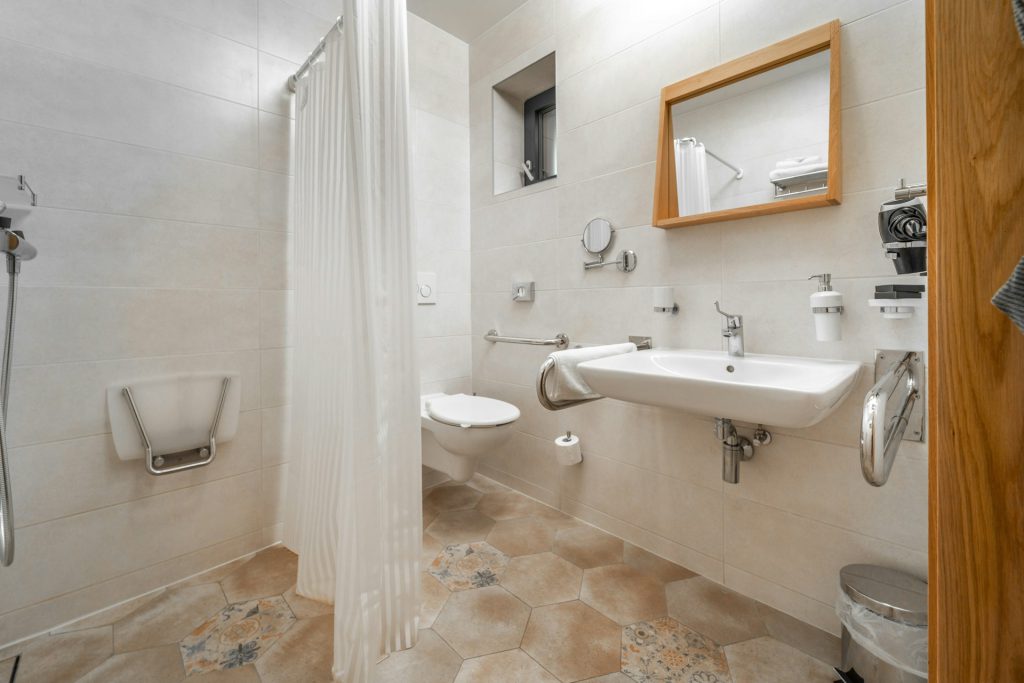
Installing a bar next to the toilet helps with standing or sitting. A horizontal bar near the bath or shower entrance provides safe support during entry and exit. For greater flexibility, angled or vertical bars can be positioned to follow natural movement paths.
Where permanent installation isn’t possible, removable options such as suction grab bars and tension-mounted floor-to-ceiling poles are available. Suction models can be placed temporarily on non-porous, smooth tiles for short-term guests or rental properties.
Tension poles fit between floor and ceiling, offering safe handholds without drilling or wall damage. This makes them suitable for both showers and toilet areas. Users should test suction models before each use to ensure they remain secure.
Proper Installation and Common Mistakes
One common mistake is installing grab bars too high or too low for the user’s reach. Studying the user’s natural hand position while standing or seated is important. Marking the desired height beforehand ensures usability.
Another oversight is not checking for plumbing or wiring inside the wall before drilling. Always use a stud finder or seek professional guidance to prevent accidents and maintain property safety.
Grabbing surfaces should be textured for a secure grip, especially when hands are wet. Avoid placing grab bars on grout lines, as this weakens their support.
After installation, regularly check fittings to confirm they haven’t loosened over time. This is especially important in high-moisture areas. If in doubt, a qualified installer or occupational therapist can offer tailored advice.
Accessible Bathing Solutions for Limited Mobility
For many older adults, traditional baths become more difficult and dangerous to use as mobility decreases. The high sides require substantial stepping and balancing ability. The slippery surfaces can increase fall risks.
A range of walk-in bath options provide safer alternatives. These specialist baths feature watertight doors that allow users to enter at floor level without climbing over high sides. They often include built-in seating, non-slip flooring, and grab bars for added safety.
When researching walk in bath options, several important features are worth attention. Look for models with quick-fill and quick-drain capabilities to minimise waiting time. Anti-scald temperature controls can help prevent accidental burns.
For some users, walk-in showers may be preferable to walk in baths. These barrier-free options eliminate thresholds completely and can accommodate wheelchairs or shower chairs. The choice depends on personal preference, available space, and specific mobility needs.
Funding and Support for Bathroom Adaptations
Financial support can help make bathroom adaptations more accessible for UK residents. For details about means-tested grants available for home adaptations, visit the official UK government page for the Disabled Facilities Grant.
The NHS and local councils offer assessment services through occupational therapists. These professionals can recommend suitable bathroom modifications based on individual needs. They evaluate movement and mobility challenges and suggest specific adaptations.
Disabled Facilities Grants (DFGs) provide a main funding source. They offer up to £30,000 in England for necessary home adjustments. These grants are means-tested but consider only the disabled person’s income and savings, not those of the entire household.
Many bathroom adjustments for older adults or those with disabilities may qualify for VAT exemption. This potentially saves on products and installation costs. Check current government guidance to confirm eligibility and claiming procedures.
Maintaining Independence Through Practical Design
Making a bathroom safer is not just about preventing accidents. It is about preserving dignity and independence. Careful design choices can make bathrooms both safer and more comfortable to use.
Colour contrast plays an important part in bathroom safety, particularly for those with visual impairments. Using contrasting colours for grab bars, toilet seats, and bath edges makes these features easier to identify. This supports safer navigation throughout the space.
Balancing Practicality With Style
Consider the emotional aspects of bathroom design as well. Many older adults resist safety modifications because they fear their home will look institutional. Modern bathroom safety products come in stylish designs that blend with home décor.
Opting for subtle, attractive fixtures may encourage acceptance and daily use. Choosing taps, seats, and rails in finishes that match existing bathroom elements allows safety upgrades to fit seamlessly into the space.
Temperature regulation becomes more important with age. Thermostatic mixer taps can help prevent scalding by keeping water temperature consistent. This works even if pressure changes elsewhere in the plumbing system.
Selecting fixtures with clear temperature markings and easy-turn handles helps those with arthritis or reduced dexterity. These features maintain comfort and control for users with various needs.
Image from Getty Images licensed under Unsplash+