
Practical Steps for Managing a Late-Life Border Move
Collaborative Post
A late-life move across a national border needs careful preparation because healthcare, finances and everyday routines may work differently at the new address. Start several months ahead if possible and involve the person moving in every decision, including what comes with them and how quickly the move proceeds. A single folder, kept both on paper and digitally, can hold key dates, contact details and copies of important documents. This gives relatives and professional advisers one reliable reference point if a question arises.
Coordinate Medical and Financial Records
Ask current healthcare providers for a concise medical summary covering diagnoses, prescriptions, allergies, recent test results and ongoing referrals. Check how much medication can be supplied before departure and identify the process for registering with local services at the destination. Keep essential medicines and original prescriptions in hand luggage during the move.
Contact pension providers, banks and insurers early, as an overseas address may affect payments, tax arrangements or policy terms. Review likely healthcare spending alongside housing and travel costs. This guide to managing medication costs in retirement can help families include recurring prescriptions in the wider budget. Before closing any account, confirm that another suitable payment method is active and tested.
Moving Personal Belongings with Dignity
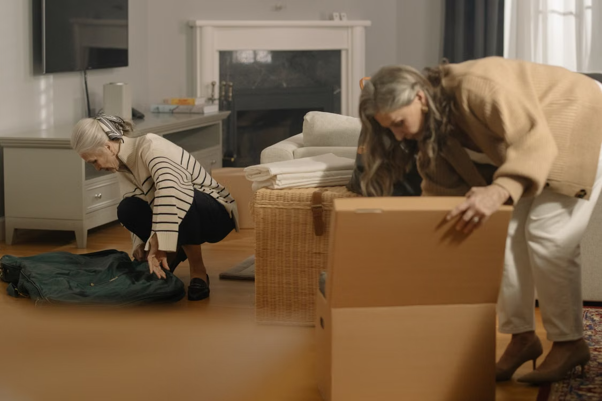
Give sorting decisions enough time. A rushed clear-out can feel upsetting, particularly when possessions represent decades of family life. Work through one small area at a time and use four clear categories: take, give to family, donate and dispose. The moving tips for seniors also recommend planning and reducing avoidable physical strain.
Photograph sentimental objects that can’t travel and record the story behind each one. A labelled photo album can preserve far more meaning than an unmarked box in storage. Obtain written removal quotes that explain packing, customs paperwork, insurance and delivery access. Pack a first-night case separately with clothing, toiletries, chargers, glasses and familiar bedding so that comfort doesn’t depend on every box arriving at once.
Sorting Cross-Border Vehicle Formalities
Decide early if keeping the car remains practical. Consider its age, condition and suitability for local roads, along with transport, customs, testing, modification, registration and insurance costs. Selling before the move may be simpler in some cases, but a familiar vehicle can support independence where local transport is limited.
Rules depend on the departure country, destination and vehicle history. For someone moving to the UK, specialist guidance on importing a car from Ireland explains services covering transport, customs clearance, required modifications, testing and DVLA registration. Gather the registration certificate, purchase evidence, insurance records and identification before requesting a quotation. Avoid cancelling existing cover until written confirmation shows when the replacement policy begins.
Create a Calm Transition Schedule
Build the schedule around the older person’s energy levels and medical needs. One demanding appointment per day may be enough, especially if mobility, memory, or fatigue is a concern. The senior moving guide offers useful ideas for reducing stress during the transition.
A workable timetable might reserve the first week for utilities and paperwork, the second for packing and the final days for rest, farewells and last checks. Arrange help at both ends and confirm who will carry luggage, collect keys and set up the bedroom. Leave flexibility for delayed documents or transport changes.
On arrival, unpack the bed, bathroom items and medicines first. Put clocks, photographs and a favourite chair in familiar positions where possible. A written card beside the telephone should show the new address, family contacts and local healthcare number. These small details can make the first evening feel settled while the remaining boxes wait until tomorrow.
Image Credit: Pexels