
Finding the Right Mobility Support for Seniors Recovering from a Fall
Collaborative Post
A fall can shake an older relative’s confidence in an instant and arranging the right support often feels overwhelming from a distance. Recovery is rarely about one product or one decision – it takes the right mix of hands-on help, safety technology and mobility aids working together. The options below are vetted, practical starting points for putting that support in place, so your relative can rebuild strength and regain their independence at home.
Understanding the Reality of Senior Falls
Falls among older adults in the UK aren’t isolated incidents. Around 209,000 emergency hospital admissions due to falls occurred across England in 2022/23 alone, showing just how widespread this concern is for families. A single fall rarely comes out of nowhere, either. Reduced muscle strength, poor lighting, loose rugs and certain medications will raise the odds.
For many families, the first sign that something is wrong is a phone call from a hospital rather than a conversation at home, since older relatives often live some distance away or don’t want to worry anyone over a stumble that seemed minor. The gap between when a fall happens and when family finds out is where useful support is most often missed. When an ambulance is called, most callouts result in hospitalisation, particularly in regions like North West England.
The severity extends beyond the immediate hospital visit. Hip fractures are the most common serious injury, and roughly 76,000 occur annually in the UK, most resulting from a combination of a fall and weakened bone strength. Recovery from this type of injury can be lengthy and demanding. This reality underscores why arranging mobility support for seniors after a fall matters so much.
What “The Right” Mix of Support Looks Like
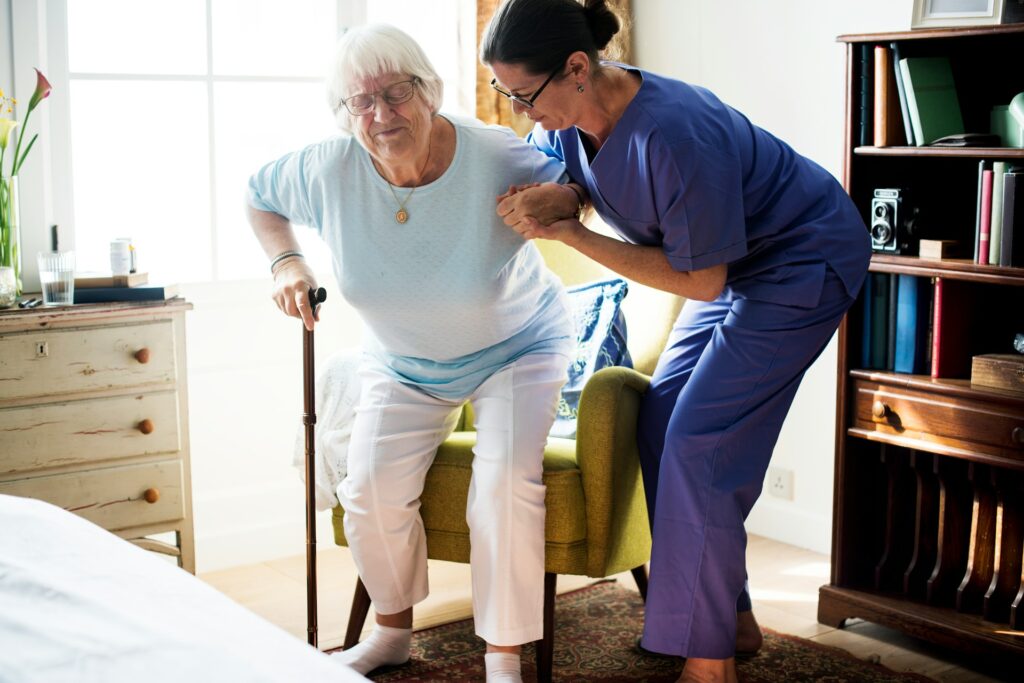
Good post-fall support typically combines three layers at once. Hands-on caregiving means someone is physically present to help with movement, bathing or meal prep. Monitoring technology provides peace of mind when no one is there. Physical equipment, sized and fitted to the person, rounds things out. Research shows older adults given this kind of layered support had fewer falls at home than those given a single type of help.
Why Your Loved One Needs More Than Physical Devices
Grab bars, walkers and other physical aids are necessary tools, but they’re not sufficient on their own. Real mobility recovery depends on structured, guided practice that rebuilds strength, balance and confidence over time. Research shows that guided rehabilitation improves mobility outcomes and quality of life in older adults compared with recovering without structured support.
The difference comes down to consistency and human connection. When a senior is recovering alone, even the best equipment sits unused or gets used incorrectly. Regular assistance helps your relative practice movement, rebuild muscle strength and regain the confidence to navigate their home independently. That consistent support also lowers the risk of a repeat fall.
Where to Get Mobility Support for Older Adults
Here are some great options for this type of care.
Village Caregiving
Village Caregiving is a mission-driven, family-focused in-home care provider founded in 2013, now serving families across 22 US states through over 60 local offices. Coordinators build a plan around your relative’s post-fall needs, whether that’s an in-home caregiver for a senior recovering from a fall who needs help getting to the bathroom, hands-on help with bathing or simply having someone present.
Flat-rate pricing stays the same regardless of the day or time and support flexes from a few hours a week to daily visits as recovery progresses.
Helping Hands Home Care
UK-based Helping Hands Home Care provides visiting or live-in carers across England and Wales. Their senior fall recovery home care services support daily routines like moving around the house with confidence, preparing meals and keeping a steady schedule.
One useful quality signal is that Helping Hands directly employs its carers rather than using an introductory or self-employed model and it operates through a network of CQC-regulated branches. That structure can offer reassurance when you’re coordinating care from a distance.
Careline365
Scheduled care visits address many needs, but they don’t cover the hours your relative is alone. That’s where a personal alarm with automatic fall detection becomes valuable. Careline365 offers wearable devices that connect to a monitoring centre around the clock. If your loved one falls or presses the button, the system triggers a call for help even if the wearer can’t reach a phone or speak clearly.
This type of technology fills the coverage gap between visits. Overnight, in the evenings or any time a carer isn’t present, the alarm serves as a backup layer of support.
Empowering Your Loved One During Their Recovery Journey
Recovering well from a fall isn’t about one single fix. It’s about people, technology and equipment working together. In-home caregivers from Village Caregiving or Helping Hands Home Care provide daily assistance that helps rebuild strength and confidence. Personal alarm technology like Careline365 closes the gap for hours when no carer is present. The right mobility equipment from CareCo gives your relative the tools they need to get through their day.
Combining these three elements can give your older relative a strong foundation for a confident return to independent living at home. Recovery takes time, but with the right support in place, it’s within reach.
Image from Unsplash